Friday, 25 March 2011

Representation of characters in the music video

Frankenstein’s Monster

- Frankenstein’s Monster is represented as having many different emotions throughout the course of the music video. He seems to start off as a scary character as he sits up in a robotic kind of way and pushes Frankenstein. This shows the audience the dangerous side of Frankenstein’s Monster. However when we are first introduced to the character he is seen as being quite vulnerable as Frankenstein leans over him in a dominant position. Another side that we see to the character is happiness or eagerness when he is trying to impress the female character. This is the representation that challenges the stereotype of the monster. Lastly we see sadness which again challenges the stereotypical view that is often shown as this shows the audience that the character of Frankenstein’s Monsters has human emotions. This shows overall that Frankenstein’s Monster has four different emotions as the music video that we have created progresses and they are Scary, Vulnerable, Happy and Sad.

Frankenstein

- The character of Frankenstein is represented as being the traditional baddy in this music video. Although this isn’t really warranted the audience get this perception because of the start of the music video. The shot of Frankenstein in the castle showed him as a scary figure. This representation is also helped by the fact that he is holding the monster against his will in the castle at the start. In all films and television programs the stereotypical baddy always gets their comeuppance and in this music video it is know different with Frankenstein eventually being killed although the audience are unaware of who the murderer is at the end of the video.

Female Character

- Like The Monster, the female character is represented as having different emotions throughout the music video. She seems to start of happy when she is picking oranges in the garden. At this point in the narrative she is represented as being kind, bright and an overall happy person. However this changes the first time she see Frankenstein’s monster as her facial expressions reveal to the audience that she does not like what she sees as she is quite a shallow person. However this changes again as she gets to know the monster and her beautiful, bright personality that was shown to the audience when she was first introduced comes out.

Thursday, 24 March 2011

Representation of people/groups.

There are three varied groups in our video. First is the evil doctor, we portrayed his as comical, and creepy. We did this because the audience would find it hard to relate to an evil doctor, and due to the time slot of the video, we couldn’t explore his character and let the audience find parts of him to relate to. So it was more effective to portray him as someone who’s entertaining to watch.
Our second character is the doctor’s monster, we portrayed him as someone who other’s aren’t fond of (through the woman’s various reactions) and as someone who’s keen to please, and wants a partner, but is rejected. Most audiences can relate to this, or at least feel sympathy for him.
The third character in our video is the woman. Her role in the video is as the monster’s desired object, through her, we see the monster’s hope, and through her we feel sympathy for the monster and connect with him.
There is a reason to why we represented the group as we’ve done. When doing a narrative in a music video, you can only explore one character in enough depth for the audience to connect with him/her. We did this by having multiple characters and using the secondary characters to explore the main characters.
The song itself is popular within our target audience (15-25), but the video is unconventional. I think the audience will respond well to the video, because it has elements of modern day videos (dance routine, women sexually objectified, comedy), but we’ve portrayed these aspects in an old fashioned way (apart from the dance routine); this will appeal to those tired of watching four minute dance routines, and I think that is a large audience field for us to grab.

Monday, 21 March 2011

Shooting Schedule

September 2010

Date

Time

Duration

Thurs 7/9/10

11:00 am

3 hours

Thurs 16/9/10

11:00 am

3 hours

Thurs 23/9/10

12:00 pm

2 hours

Mon 30/9/10

10:45 am

1 hour

October 2010

Date

Time

Duration

Mon 4/10/10

11:00 am

3 hours

Thurs 7/10/10

11:00 am

2 hours

Thurs 14/10/10

10:00 am

1 hour

Friday 15/10/10

3:00 pm

2hours

November 2010

Date

Time

Duration

Thurs 4/11/10

11:00 am

2 hours

Mon 15/11/10

3:00 pm

3 hours

Thursday, 17 March 2011

Casting, Props and Costume

Actors

Adam Brewer – Frankenstein

Ashston Hockham-Marshall – Monster

Hannah Smith- Monsters Romantic Interest

Decepticons – Dance Group

Extras

Sam Zekeria

Costume

Lab coat

Wig

Wedding Dress

Ripped clothing (Frankenstein monster)

Black and white ripped t-shirts (Decepticons)

Formal Jacket (Sam Zekeria)

Make up

Face paint (Black, Green, Grey and White)

Friday, 25 February 2011

Conventions of music videos


Fast Edits – Edits are usually no more than a few seconds, adds to the pace and therefore keeps the audience engaged


Multiple Shots


Feature the lead singer or band – Members of the audience recognise the singers, adds to their star status


Relationship between the music/lyrics and the video or image


Dance Routine


Appropriate mise-en-scene for the genre of music


Cross-cutting between narrative and performance (of band of singer)


Frequent use of montage editing


Average length approx 3-4 minutes


Michel Gondry


Spike Jonze


David Fincher


Info on the director – their background and where they are today – examples of their films


Their style – how would you describe their style of filming


Their Music Videos – list what videos they have created and discuss their style


Screenshots from the music videos – annotated outlining their stylistic features


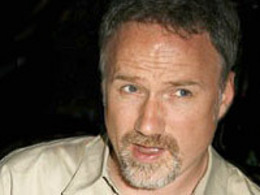
David Fincher


Info on the director – their background and where they are today – examples of their films


1) David Fincher was born on August 28, 1962


2) Fincher began making movies at age eight with an 8 mm camera


3) He was hired by Industrial Light & Magic in 1980


4) In 1984, he left ILM to direct a commercial for the American Cancer Society


5) This quickly brought Fincher to the attention of producers in Los Angeles


6) Though he would continue to direct spots for companies like Revlon, Converse, Nike, Pepsi, Sony, and Levi's, Fincher soon discovered music videos and went on to direct many promos


7) Fincher has also worked on many feature films including Alien 3 (1992) Se7en (1995)The Game (1997)Fight Club (1999)Panic Room (2002)


Zodiac (2007)The Curious Case of Benjamin Button (2008)The Social Network (2010)


Their style – how would you describe their style of filming


Fincher is known for his dark and stylish thriller movies which reflects some of the films that he has directed such as Se7en,


The Game, Fight Club and Zodiac


Their Music Videos – list what videos they have created and discuss their style


"Dance This World Away", Rick Springfield (1984)


"Celebrate Youth", Rick Springfield (1984)


"Bop Til You Drop", Rick Springfield (1984)


"Shame", The Motels (1985)


"Shock", The Motels (1985)


"All The Love", The Outfield (1986)


"Every Time You Cry", The Outfield (1986)


"One Simple Thing", Stabilizers (1986)


"She Comes On", Wire Train (1987)


"Should She Cry", Wire Train (1987)


"Endless Nights", Eddie Money (1987)


"Downtown Train", Patty Smyth (1987)


"I Don't Mind At All", Bourgeois Tagg (1987)


"Notorious", Loverboy (1987)


"Love Will Rise Again", Loverboy (1987)


"Johnny B", The Hooters (1987)


"Storybook Story", Mark Knopfler (1987)


"Can I Hold You", Colin Hay (1987)


"No Surrender", The Outfield (1987


"Say You Will", Foreigner (1987)


"Don't Tell Me The Time", The Motels (1987)


"Tell It To the Moon", The Motels (1988)


"Heart of Gold", Johnny Hates Jazz (1988)


"Englishman in New York", Sting (1988)


"Shattered Dreams" (second version),
Johnny Hates Jazz (1988)


"Get Rhythm", Ry Cooder (1988)


"Most of All", Jody Watley (1988)


"Roll With It", Steve Winwood (1988)


"(It's Just) The Way That You Love Me" (version 1988), Paula Abdul (1988)


"Holding On", Steve Winwood (1988)


"Heart", Neneh Cherry (1989)


"Bamboleo" (second version), Gypsy Kings (1989)


"Straight Up", Paula Abdul (1989)


"Most Of All", Jody Watley (1989)


"Real Love", Jody Watley (1989)


"Bamboleo" (third version), Gypsy Kings (1989)


"She's a Mystery to Me", Roy Orbison (1989)


"Forever Your Girl", Paula Abdul (1989)


"Express Yourself", Madonna (1989)


"The End of the Innocence", Don Henley (1989)


"Cold Hearted", Paula Abdul (1989)


"(It's Just) The Way That You Love Me" (version 1989), Paula Abdul (1988)


"Oh Father", Madonna (1989)


"Janie's Got a Gun", Aerosmith (1989)


"Vogue", Madonna (1990)


"Cradle of Love", Billy Idol (1990)


"L.A. Woman", Billy Idol (1990)


"Freedom '90", George Michael (1990)


"Bad Girl", Madonna (1993)


"Who Is It?", Michael Jackson (1993)


"Love Is Strong", The Rolling Stones (1994)


"6th Avenue Heartache", The Wallflowers (1996)


"Judith", A Perfect Circle (2000)


"Only", Nine Inch Nails (2005)


Notable Names – Michael Jackson, The Rolling Stones, Aerosmith, Madonna, George Michael and Paula Abdul

· Feature the lead singer or band members – so the audience recognise the singers, adds to their star status.

· Fast cuts – edits are usually no more than a few seconds, adds to the pace and keeps the audience engaged (MTV generation) short attention spans.

· Relationship between the music (lyrics and the video/images.

· Dance routines

· Appropriate mise-en-scene for the genre of music.

· Genre signifiers, which the audience decode.

· Cross cutting between narrative + performance (of band or singers)

· Frequent use of montage editing

· Average length approx 3-4 mins

Intertextuality: Intertextuality is the shaping of texts' meanings by other texts. It can refer to an author’s borrowing and transformation of a prior text or to a reader’s referencing of one text in reading another.

One of the pleasures that audiences experience in the consumption of media texts is the joy of recognition. One form of this pleasure comes in recognising the reference in one media text to other media texts. This process of referencing is called intertextuality.

Hall's Theory of encoding and decoding is a theory of Reception Theory developed by Stuart Hall.

According to the theory, audiences can have three different reactions to a media text, whether it is a film, documentary or newspaper:

Dominant, or Preferred, Reading - how the director/creator wants the audience to view the media text;

Opposition Reading - when the audience rejects the preferred reading, and creates their own meaning of the text;

Negotiated Reading - a compromise between the dominant and opposition readings, where the audience accepts parts of the director's views, but has their own views on parts as well.